

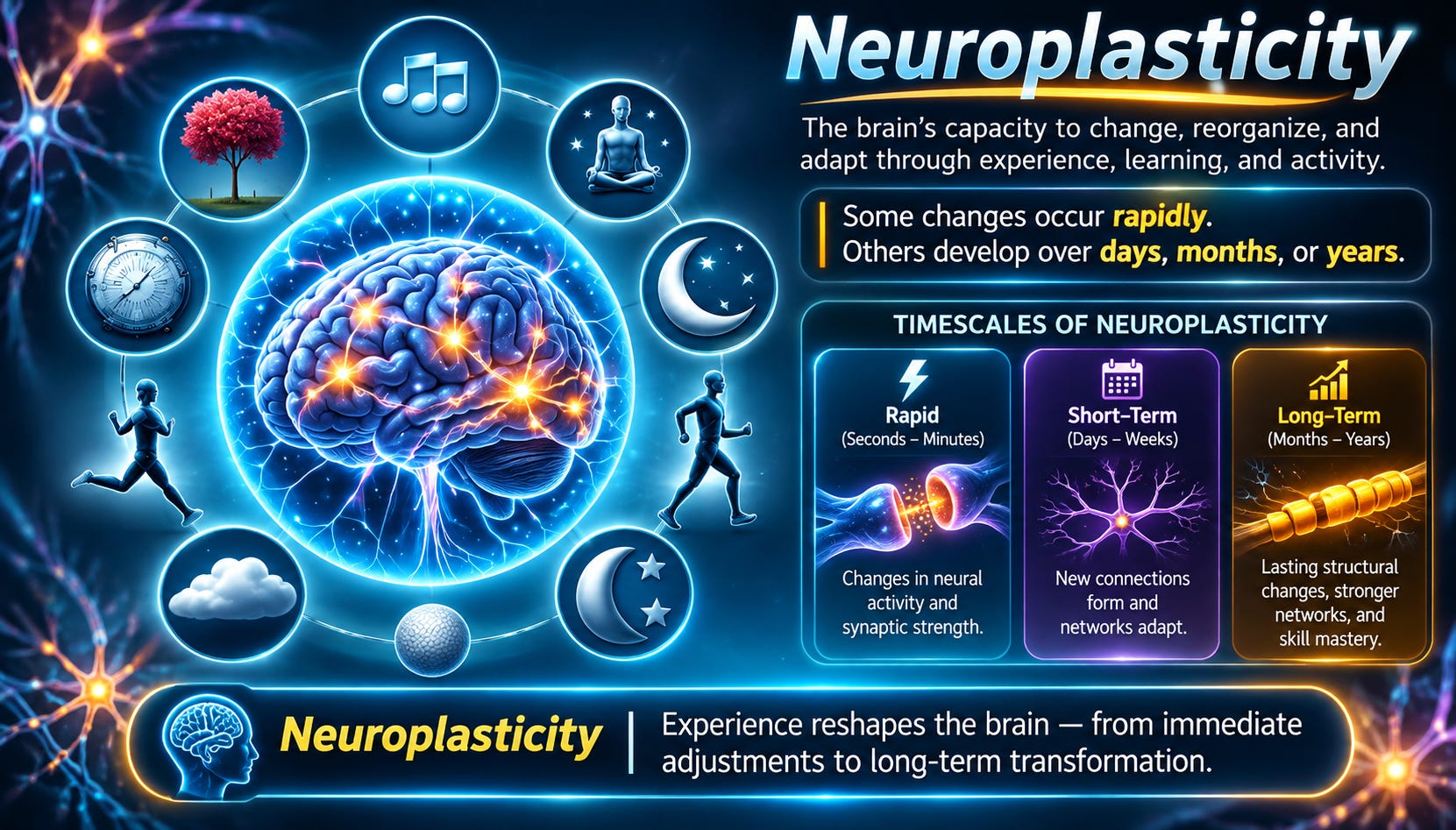
The human brain has an extraordinary ability called neuroplasticity—the capacity to reorganize, adapt, and change through learning and experience.
For centuries, humanity has expanded its knowledge through education, experimentation, and discovery. Now, artificial intelligence introduces an entirely new opportunity.
AI can analyze and connect enormous amounts of information across disciplines, helping us explore relationships that might otherwise remain invisible.
But there is a fundamental difference between delivering information and stimulating intellectual engagement.
Imagine an AI that doesn’t simply repeat explanations until you memorize them, but instead challenges your assumptions, follows your curiosity, introduces new perspectives, and encourages you to discover connections for yourself.
And imagine that relationship working in both directions.
The human challenges the AI. The AI challenges the human. Together, they explore possibilities neither might have considered at the beginning.
This is the foundation of what I’m investigating through HASE (Human Artificial Intelligence Synergy Engine)—an AI architecture envisioned to evolve into a lifelong intellectual companion.
In my latest article for The Merge, I explore the biological foundations of neuroplasticity, what triggers learning and adaptation, and whether we can engineer Human–AI interactions that better support continuous intellectual development.
This is the first installment of an ongoing investigation into neuroscience, artificial intelligence, and humanity’s intellectual evolution.
The objective is not simply to expand what humans know, but to expand how humans are capable of thinking.
That is the pursuit of Intellectual Enlightenment.
📖 Read the full article:

I welcome your thoughts, challenges, and perspectives. This research is an open invitation to intellectual collaboration.
#Neuroplasticity #ArtificialIntelligence #IntellectualEnlightenment #HumanAISynergy #HASE #TheMerge #Neuroscience #FutureOfAI